

Single Stage vs Two Stage Air Compressors: How to Choose the Right One
Most of choosing an air compressor comes down to two numbers: how much pressure you need (PSI) and how much air volume your tools pull (CFM). Once you know those, the single stage vs two stage air compressor question gets a lot simpler.
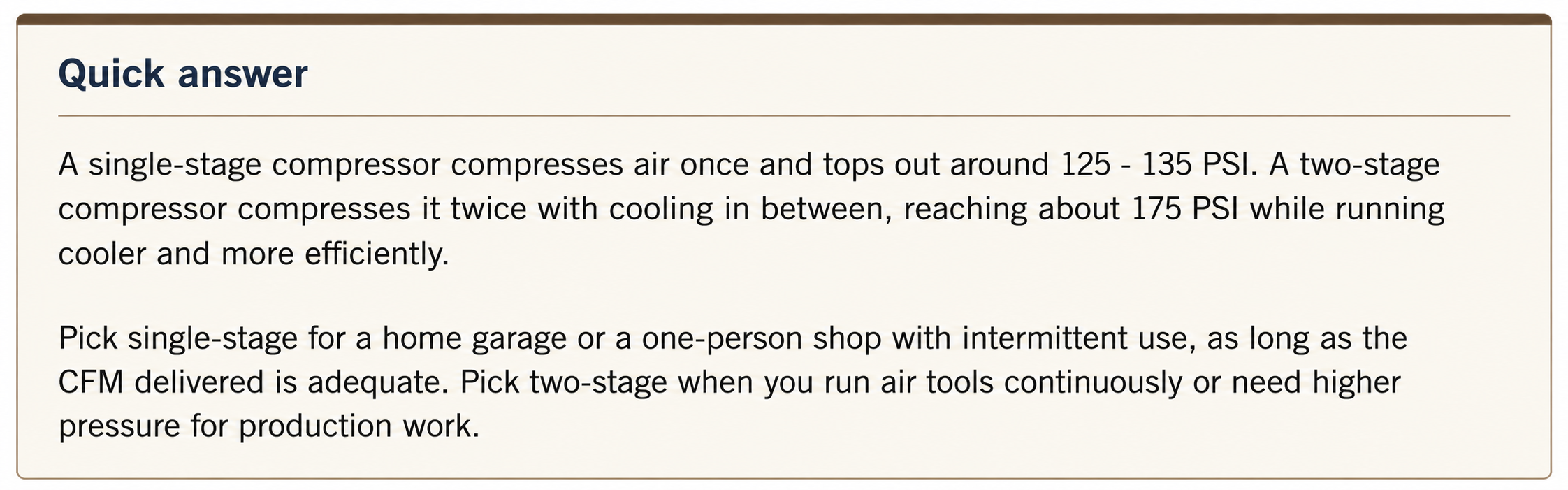
The core difference is right there in the name. A single-stage compressor compresses air one time before it hits the tank. A two-stage compressor compresses it twice, cooling the air between the two passes, which lets it reach higher pressure and run longer without overheating. This guide breaks down how each one works, what the differences mean on a real shop floor, and how to match the right compressor to the work in front of you.
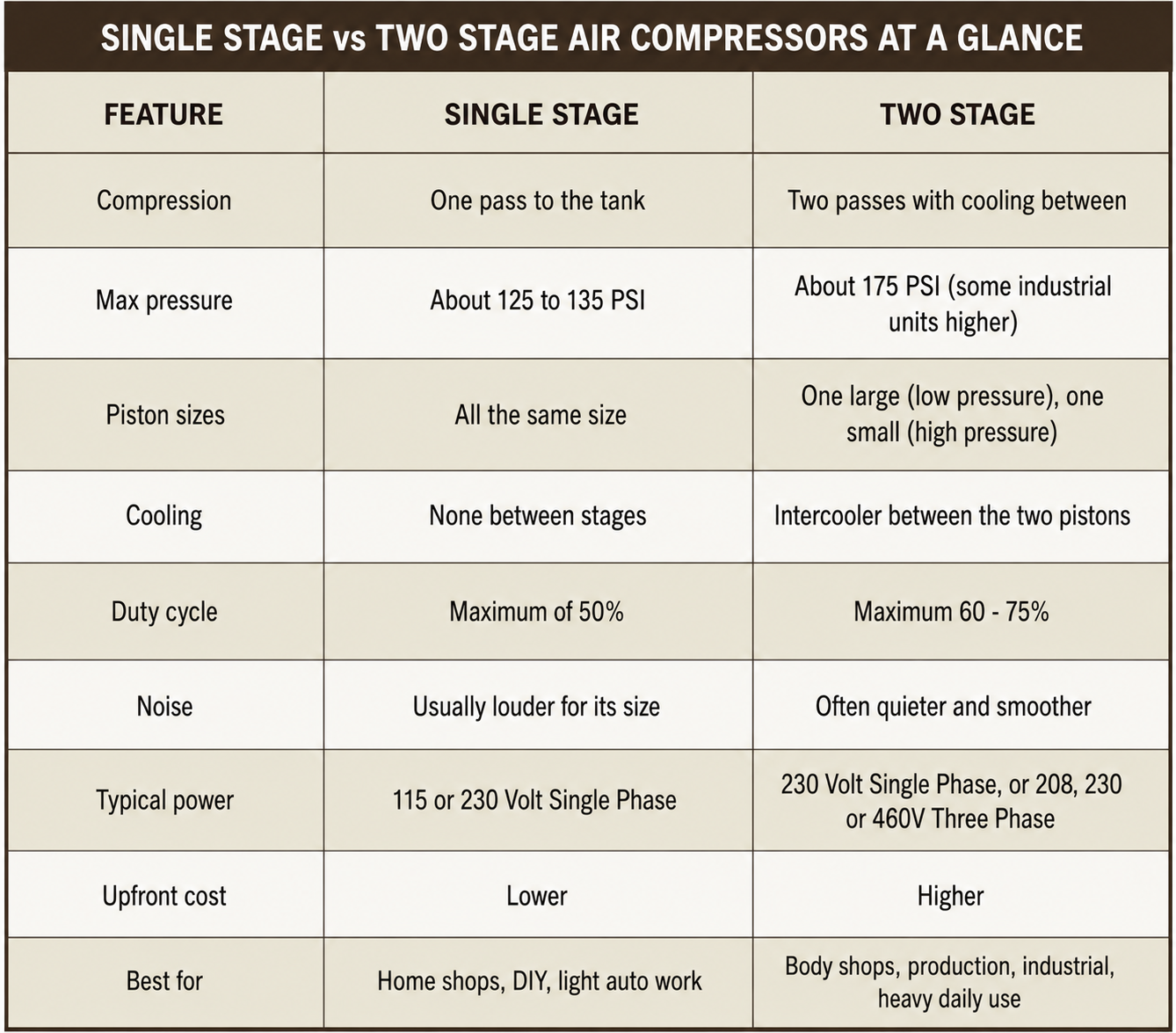
Single Stage vs Two Stage Air Compressors at a Glance
Here is the whole comparison in one view. The rest of the guide explains why each line matters.
What Is a Single Stage Air Compressor?
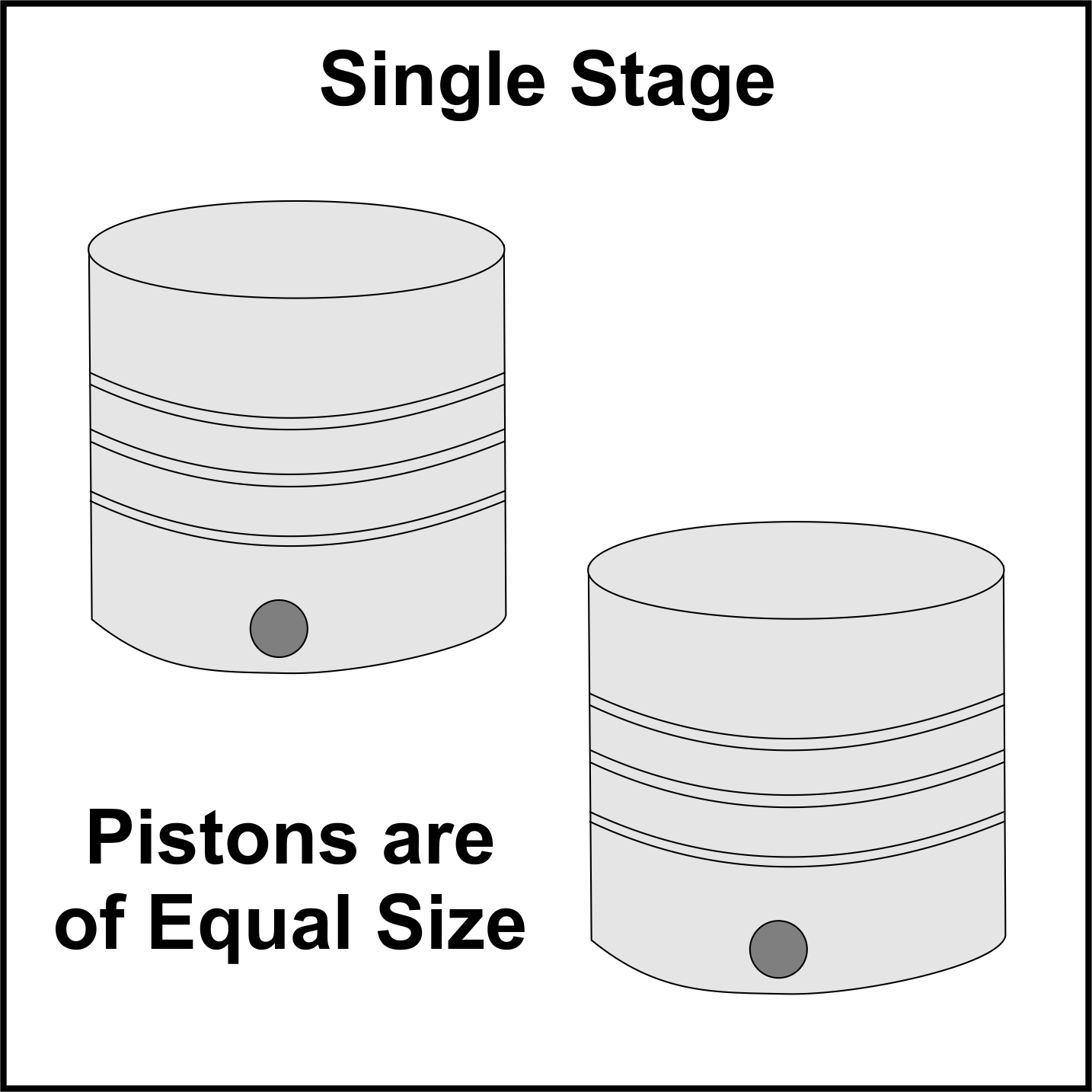
Single stage: every piston is the same size, so more pistons add air volume but not pressure.
A single-stage air compressor draws air in and compresses it a single time, then sends it straight to the storage tank. It can have one piston or several, but here is the key: every piston is the same size. Adding more pistons gives you more air volume (CFM), but the pressure stays the same because each one compresses to the same level.
That single pass usually gets you up to about 125 PSI, with some models reaching 135. For the vast majority of air tools, that is plenty, since most run happily at 90 PSI. Compressing air creates heat and with no interstage cooling, single stage compressors are not meant to run more than 50% of the time. They work on an intermittent duty cycle: run for a while, then let the motor and pump cool.
This is the right compressor for a home shop or a shop using an impact wrench 1/2" or smaller. Think tire inflation, brad and finish nailing, blowing off parts, and general DIY. If your work comes in bursts rather than a steady grind, a single-stage air compressor gives you everything you need without paying for capacity you will not use.
What Is a Two Stage Air Compressor?
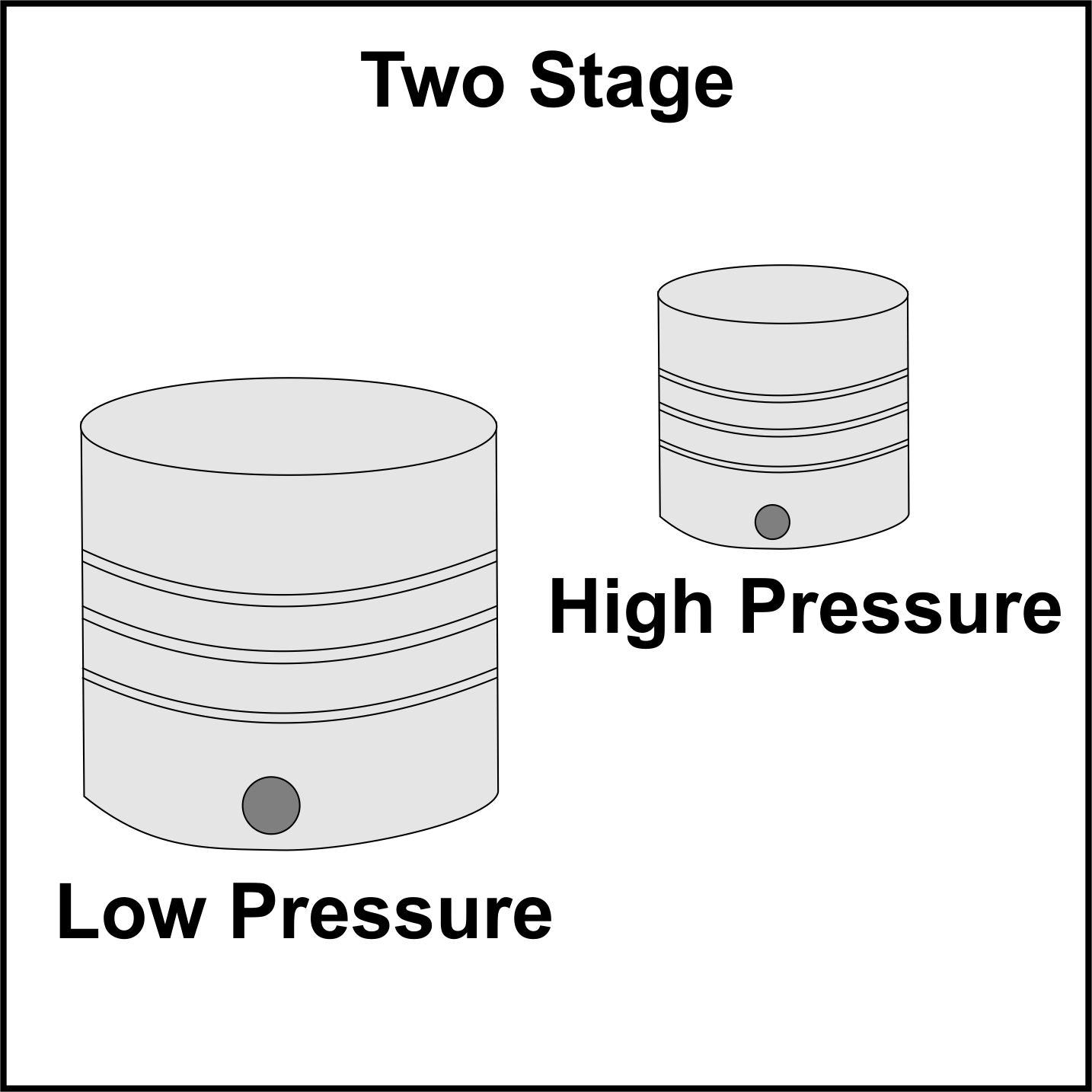
Two stage: a large low-pressure piston and a small high-pressure piston, with cooling in between.
A two-stage air compressor (also called a 2 stage or dual-stage unit) compresses air twice before it reaches the tank. It uses at least two pistons, and unlike a single-stage pump, they are two different sizes: a larger low-pressure piston and a smaller high-pressure piston.
Here is how it works. Air first gets compressed in the large cylinder. Instead of heading to the tank, that warm air travels through an intercooler, a finned tube that pulls heat out. The cooled air then enters the smaller high-pressure cylinder, where it is compressed a second time to reach around 175 PSI. Cooling the air between the two stages is what makes that second compression so effective.
Because it runs cooler and usually delivers more usable air, a two stage air compressor handles heavier loads like body shops, sandblasting and production or industrial applications that require higher CFM and potentially higher pressure. The power requirements are 230V single phase for 7.5 HP units and below (some 10 HP Single Phase Units Available) or 208, 230 or 460V Three Phase. It is vital that you keep in mind that no two stage air compressor can operate continuously. The duty cycle for a two stage piston air compressor is 60-75%, so you will need to oversize by a minimum of 25% and up to 40%.
Why Two Stage Compressors Run Cooler and Use Less Energy
The intercooler does more than protect parts. Compressing air generates heat, and hot air fights back against the piston, which wastes energy. By cooling the air halfway through, a two-stage compressor makes the second compression easier, so it delivers more air (CFM) per horsepower than a single-stage unit at the same pressure. Over a long workday, that efficiency turns into real energy savings.
Which Air Compressor Do You Need?
Forget horsepower and gallon numbers for a minute. The two specs that decide this are pressure and air volume, plus how often you will run the machine.
Start With Pressure (PSI)
Check the highest-pressure tool you own and add a small buffer. If everything you run stays under about 150 PSI, and most tools do, a single-stage compressor should cover it. If a tool or process calls for more than 150 PSI, you need a two-stage unit to reach it. You can also shop straight by pressure once you know your target on our shop by PSI pages.
Then Match CFM to Your Tools
Add up the CFM of the tools you will run at the same time, then add roughly 50% for a single stage air compressor and 25 - 40% for a two stage to allow the compressor to effectively cool between cycles. A framing nailer sips air. A DA sander, cutoff tool, or sandblaster drinks it continuously. Tools that run nonstop are where single-stage compressors struggle, not because they cannot make the pressure, but because they cannot keep up without overheating. If your tools pull steady, high CFM, lean towards a two-stage. Not sure of your number? Our shop by CFM pages lay it out by rating.
Consider Power and Space
Single-stage compressors often run on a standard 115V or 230V outlet, which suits a home garage. Larger two-stage units usually need 230V single-phase or three-phase power and a permanent spot on the floor, since they are heavy. Sort out your available power and footprint before you buy, not after it is on the truck. For a specific setting, our auto shop and industrial pages narrow things down.
What About Rotary Screw?
Piston compressors, single and two-stage alike, are built for shop-style use with rest built in. You can see the full range on our piston and reciprocating page. If you need air around the clock, a rotary screw air compressor is designed for true 100 percent continuous duty. We break that choice down further in our guide to piston versus rotary screw compressors. For most garages and shops, though, a piston compressor is the practical, cost-effective pick.
Common Mistakes When Choosing a Compressor
These are the ones we see trip people up most often.
- Buying on horsepower or tank size. A big tank just delays the refill; it does not add output. Match CFM and PSI first.
- Assuming two-stage is always better. For intermittent tools in a home shop, a single-stage compressor is lighter, cheaper, and may do the job. Two-stage capacity you never use is wasted money.
- Ignoring duty cycle. Running a piston air compressor nonstop is the fastest way to overheat it. Match the machine to how long you will run it.
- Undersizing for continuous tools. Sandblasting or sanding all day on an undersized compressor means constant waiting and a pump that never rests. Size up.
- Forgetting the power supply. Buying a compressor without confirming your available power may cause you to end up with a compressor you cannot use.
Single Stage vs Two Stage Air Compressor FAQ
What is the main difference between single stage and two stage air compressors?
A single-stage compressor compresses air once before sending it to the tank, reaching about 125 to 135 PSI. A two-stage compressor compresses air twice with cooling in between, reaching around 175 PSI while running cooler and more efficiently.
Is a two stage air compressor better than a single stage?
Better depends on the job. For higher volume work or applications that requires pressures that exceed the capability of a single stage air compressor, a two-stage air compressor would be needed. For a home garage or intermittent tool use, a single-stage compressor may save you money and is typically lighter and smaller.
What is a 2 stage air compressor?
A 2 stage (or dual-stage) air compressor uses two different-sized pistons. Air is compressed in a large low-pressure cylinder, cooled through an intercooler, then compressed again in a smaller high-pressure cylinder before reaching the tank. The result is higher pressure and cooler, more efficient operation.
Do I need a two stage compressor for air tools?
For most air tools, no. The majority run at about 90 PSI, well within single-stage range. You mainly need a two-stage compressor when you run high-CFM tools, like sandblasters, DA sanders, or paint systems in a busy shop, or when a process requires more than 150 PSI.
How much PSI does a single stage vs two stage air compressor produce?
A single-stage compressor typically produces up to about 125 to 135 PSI. A two-stage compressor typically produces around 175 PSI, and some industrial models go higher.
Can a single stage air compressor run continuously?
No. Single-stage compressors are built for intermittent duty and need time to cool between cycles. If you need a compressor that can operate beyond a 50% duty cycle, choose a two-stage piston unit for heavy shop use, or a rotary screw compressor, which is the only option for 100% continuous duty.
Find Your Single Stage or Two Stage Compressor
Once you have nailed down your pressure, CFM, and how often you will run it, the choice is usually clear. Browse our single-stage air compressors and two-stage air compressors to match a unit to your work. Still weighing it up? We have spent years helping shops size this exactly right, so send your tool list our way.
Call or text 803-339-0445, or email Sales@CompressorPros.com. Contact us.